ARLingGames

Guide

How to play Swans.

Three sentences, one lake a day, exactly one solution. Every lake is made to be reasoned out, not guessed: the swans are always enough, no guessing required.

Play today's lake Start with an easy one

The rules.

1. Draw one loop through every swan. The loop runs from the middle of one cell to the middle of the next, up and down or left and right, never diagonally, and never crosses itself, branches or passes through the same cell twice. A grid with six rows has six columns; the size changes through the week, from six by six on Monday to ten by ten on Sunday.

2. A white swan means the loop goes straight through it and turns in the cell just before or just after. A black swan means the loop turns and goes straight through both neighbouring cells. Cells with no swan may be left out of the loop altogether.

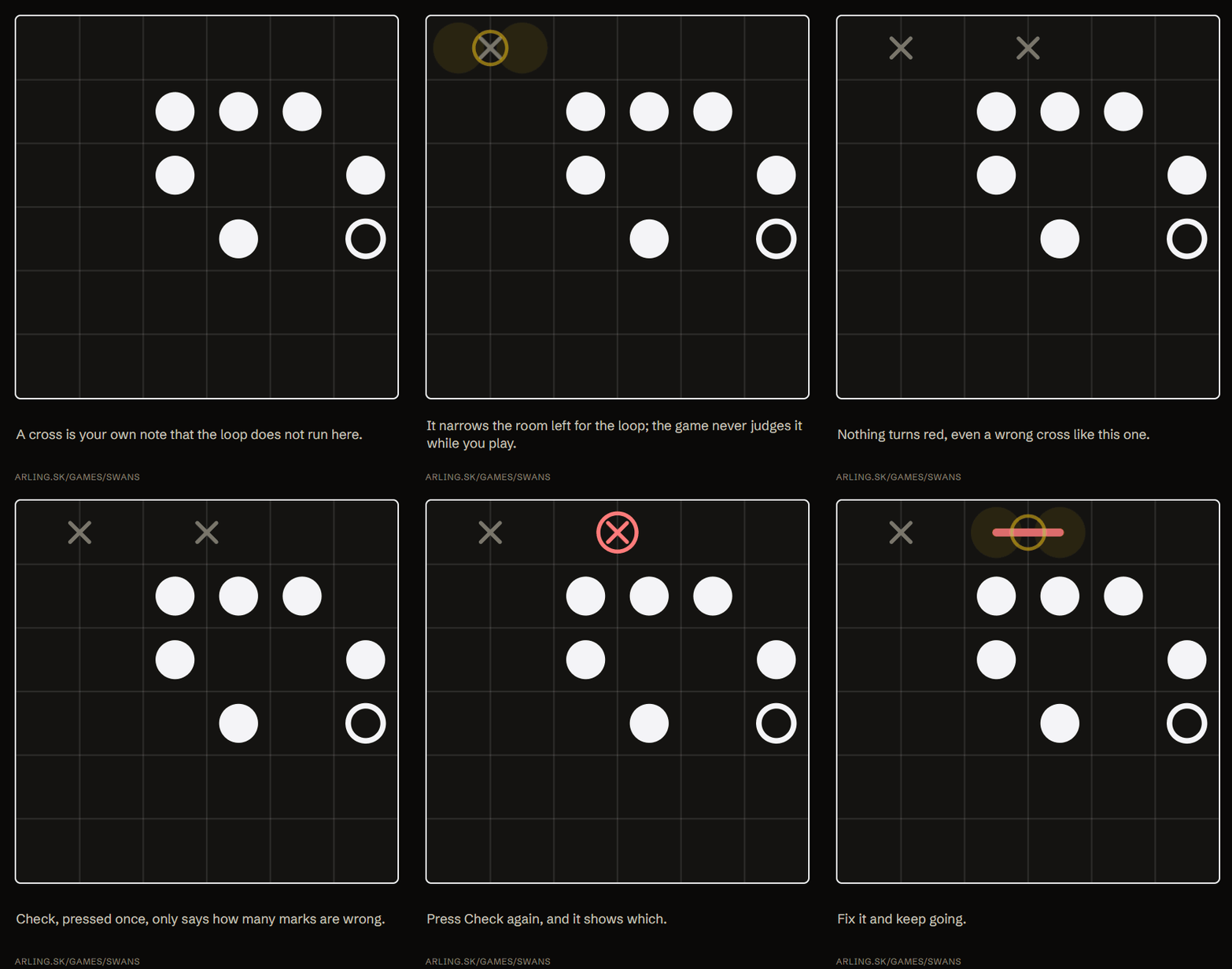
3. A cross is your own note that the loop does not run here. Crosses are yours; the game does not judge them, except when you ask with Check. When every swan has its shape and the ring is closed, the game notices by itself.
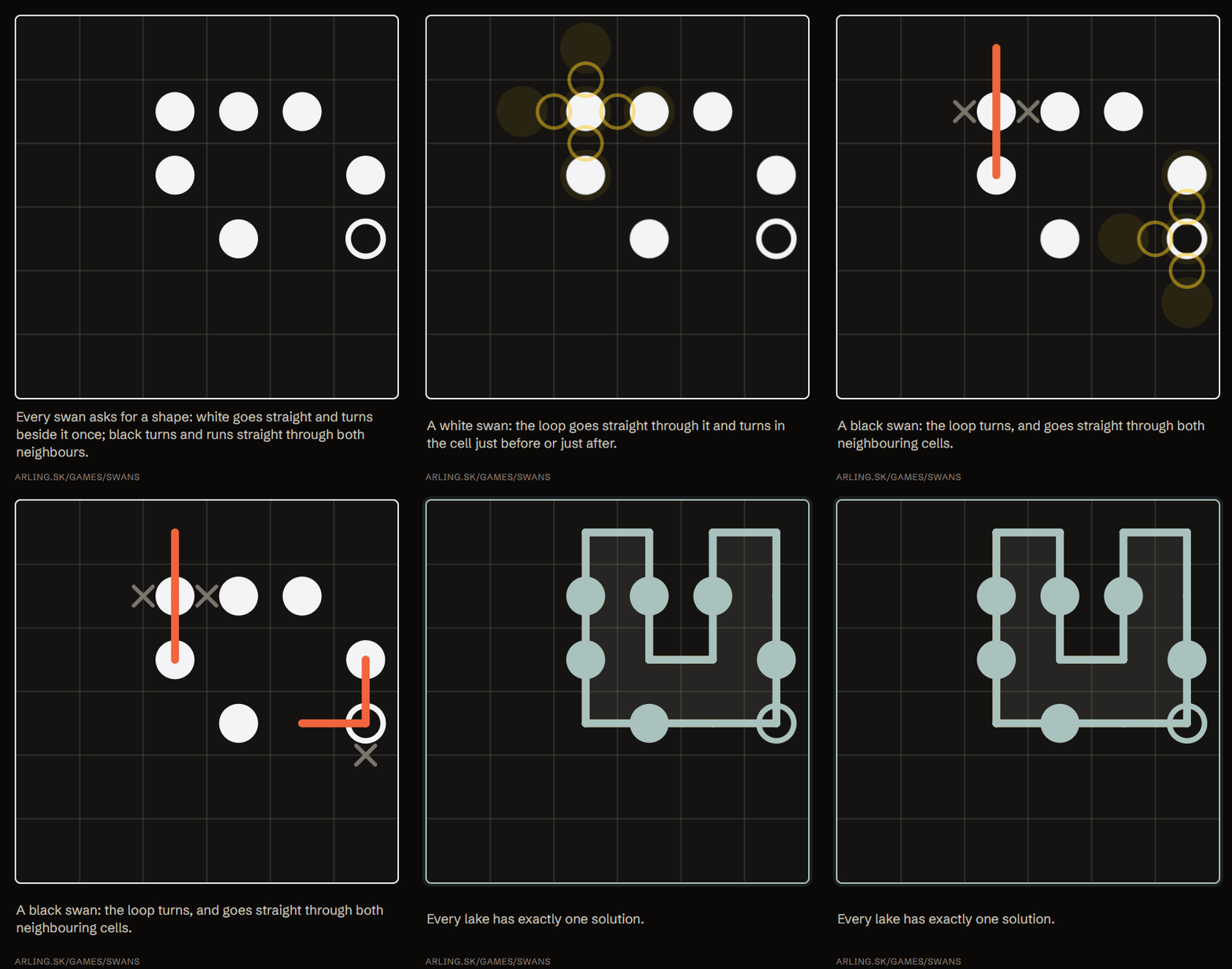
Animation: a white swan is revealed with the loop running straight through it and turning beside it, a black swan is revealed turning with both arms straight, the rest of the lake fills in, and it turns green as solved.

Crosses are notes, not answers. Placing a cross narrows the room left for the loop; the game never marks it wrong while you play, only when you ask with Check. On the phone, drag from cell to cell to draw, and drag back along the loop to rub it out. On a keyboard, arrows move the cursor, Enter starts and ends drawing, X crosses it, P pauses.

A cross you were wrong about is shown by Check, never by the board turning red while you play.

Animation: a correct cross is placed as a note, then a wrong cross next to it, nothing turns red, and a wrong cross from an earlier guess is revealed only after pressing Check twice.

A way in.

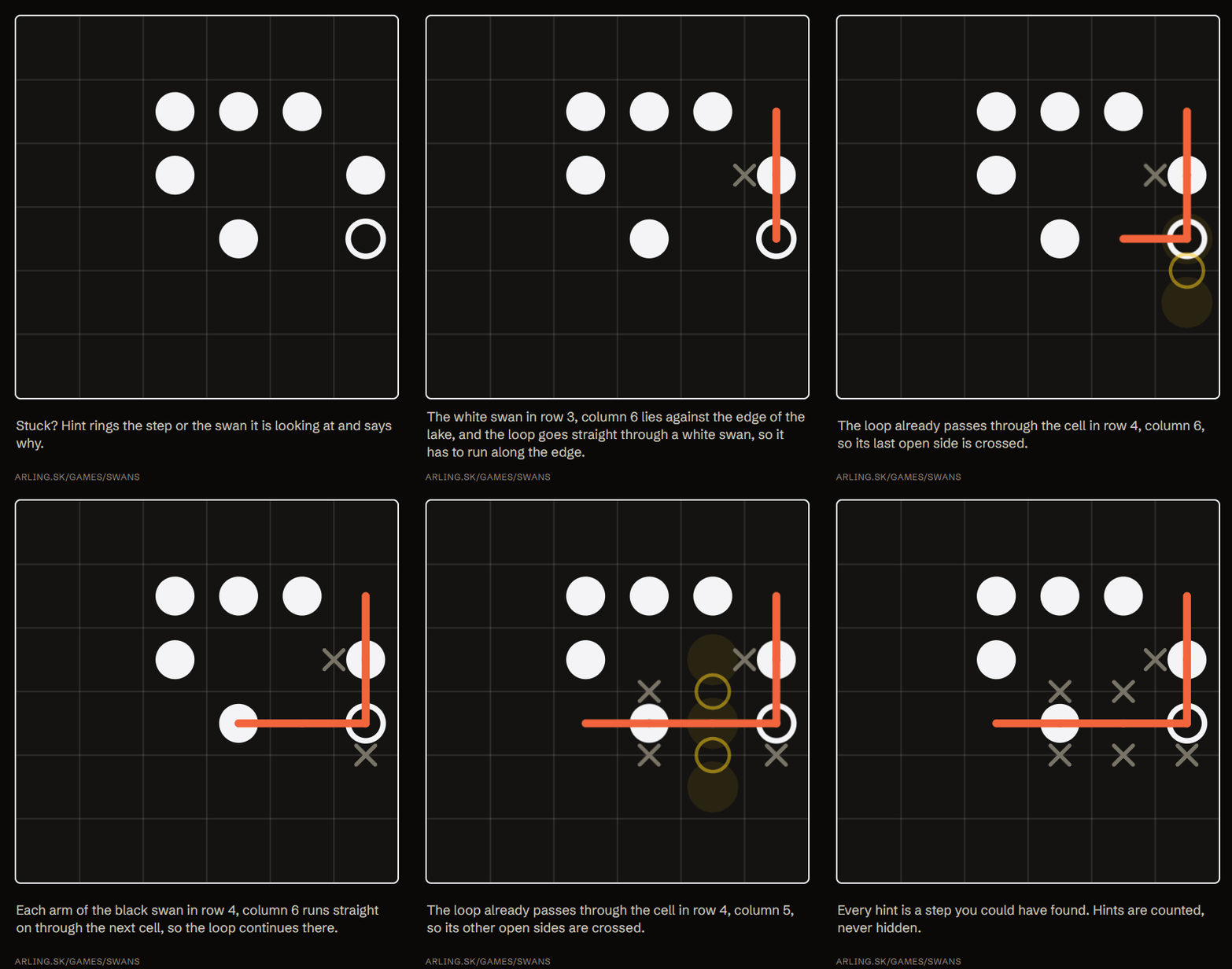
Every lake opens with steps like these. Hint finds the next one for you, rings the step or cell it is about and says why; press it again to draw it. Hints are counted and shown when you finish, never hidden.

  • Black swans at the edge. A black swan turns, so it can never send an arm off the board, and one in a corner has only one turn left to make.
  • A white swan against the edge has to run along that edge, because the loop goes straight through it and the other way is off the board.
  • Every arm of a black swan runs straight on through the next cell, so a single black swan usually settles five steps at once. The cheapest opening on any lake.
  • Three white swans in a row cannot all be crossed lengthways: the middle one would have no turn beside it, so the loop cuts across the row instead.
Animation: the Hint rings a step or a swan with a pulsing ring and explains why, then the marks are drawn; this repeats for the next steps.

The week.

Difficulty is measured, not guessed. Every lake is solved by a program that only knows named rules, in three layers; the candidates for a date are ranked by how much of the hardest layer that solving needs.

Monday, TuesdayEasy, six by six. The swans open the lake up fast.
Wednesday, ThursdayMedium, seven by seven.
Friday, SaturdayHard, eight by eight. The short-loop check and one-step trials start to matter.
SundayChallenge, ten by ten, the most trial steps of the week's candidates.

This week

Practice, archive, history.

Practice sets: twenty-four lakes with no date attached, three sets of eight for each level. They never change and do not touch your streak.

Archive: every daily lake since Wednesday 10 September 2025, free. The same page shows your own history: every lake you solved in this browser, with time and hints. Nothing is sent anywhere; it lives in your browser only.

Stuck or found something wrong? Write to andrej@arling.sk.