ARLingGames

Guide

How to play Hedgehogs.

Three rules, one garden a day, exactly one solution. The gardens are made to be reasoned out, not guessed: keeping track of where a hedgehog cannot be is most of the game.

Play today's garden Start with an easy one

The rules.

1. Two hedgehogs in every row, every column and every flowerbed. The flowerbeds are the outlined shapes. A garden with eight rows has eight columns and eight flowerbeds, so sixteen hedgehogs in all; nine by nine has eighteen, ten by ten has twenty.

2. No two hedgehogs may touch. Not side by side, not diagonally. They prickle. So every hedgehog keeps the eight cells around it empty.

3. A dot is your note that a cell stays empty. Dots are yours; the game does not judge them, except when you ask with Check. When the last hedgehog is placed, the game checks the whole garden by itself.
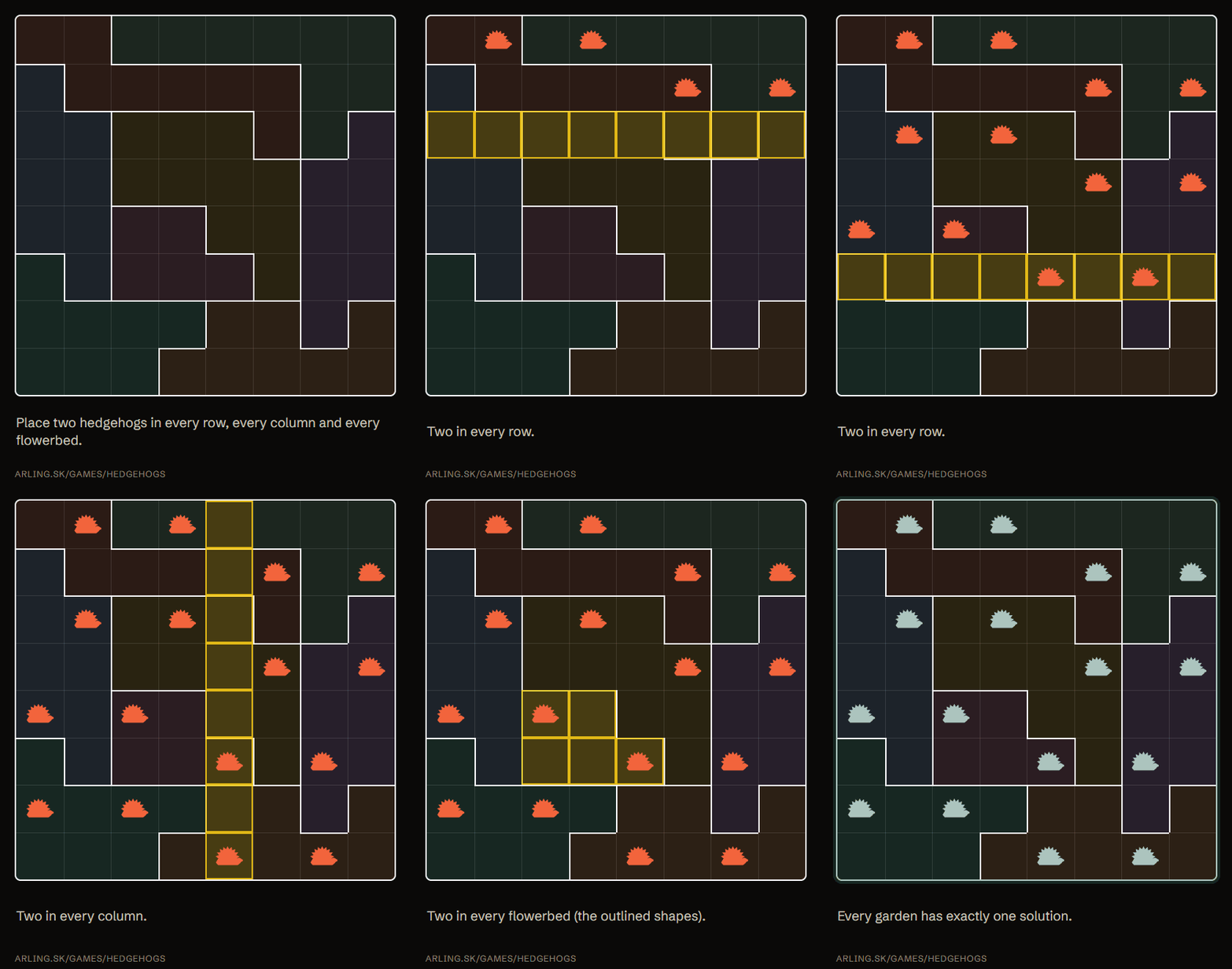
Animation: hedgehogs are placed two per row, then every column and every flowerbed is highlighted with its two hedgehogs, then the garden turns green as solved.

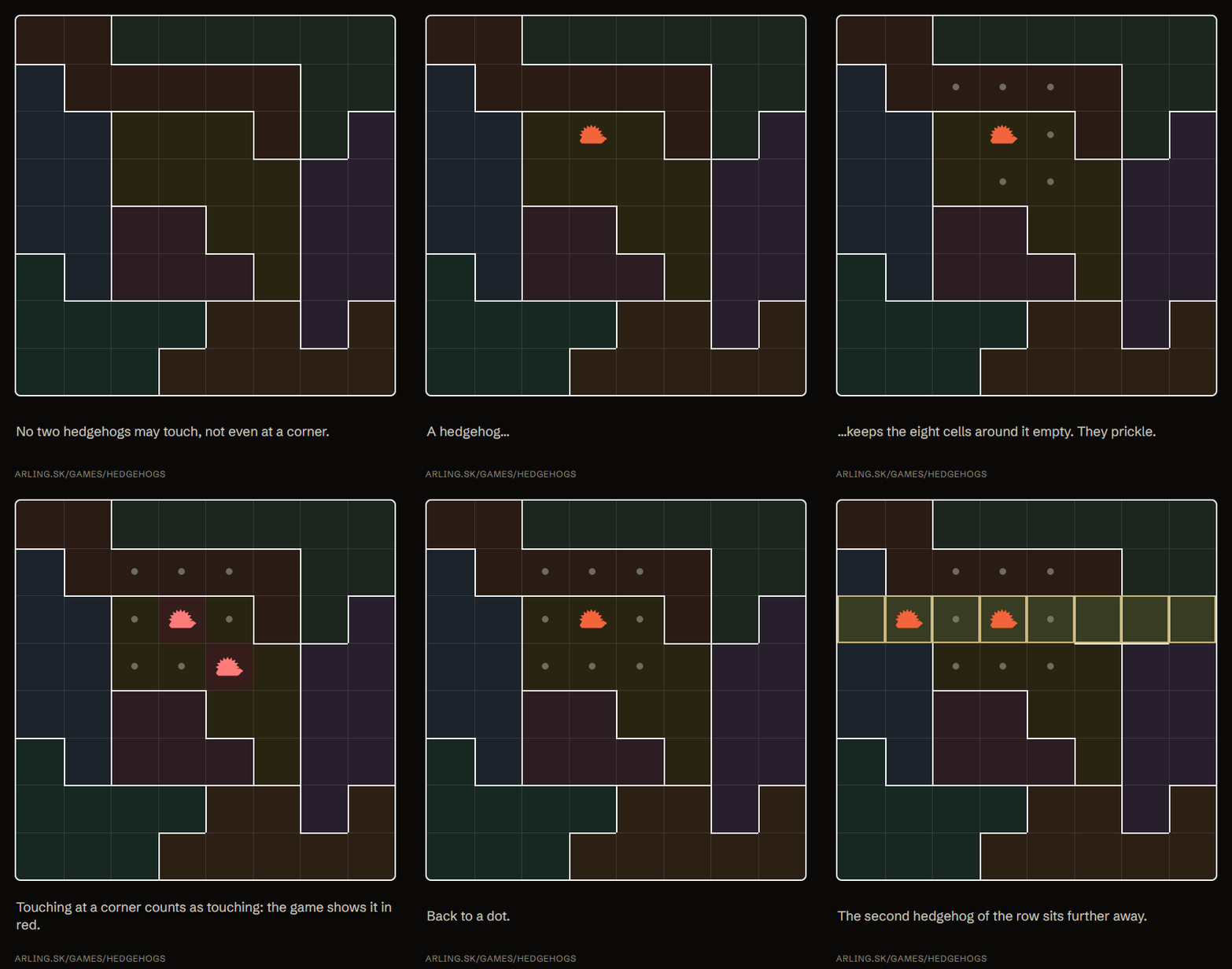
They prickle. Place a hedgehog and the eight cells around it are settled: dots go there. If a second hedgehog lands next to it, even at a corner, the game turns both red. The second hedgehog of that row or column sits at least one cell away.

On the phone, hold your finger and drag to sweep dots over several cells. On a keyboard, arrows move, X is a dot, H a hedgehog, Delete clears, P pauses.

Animation: a hedgehog is placed, the eight cells around it get dots one by one, a second hedgehog placed at a corner turns red and is removed, and the second hedgehog of the row is placed further away.

A way in.

Every garden opens with steps like these. Hint finds the next one for you, outlines the row, column or flowerbed it is looking at, marks the cells that follow and says why; press it again to fill them in. Hints are counted and shown when you finish, never hidden.

  • A full line. Once a row, column or flowerbed holds its two hedgehogs, every other cell in it is a dot.
  • Exactly enough room. A line that still needs two hedgehogs and has exactly two cells left where they fit: both are hedgehogs.
  • A flowerbed inside one row. If all the free cells of a flowerbed lie in one row (or column), the flowerbed's hedgehogs use up that row, so the rest of the row is dots. Two flowerbeds inside two rows work the same way.
  • Common neighbours. Look at every way the remaining hedgehogs of a line can be placed. A cell that touches a hedgehog in every one of those ways stays empty.
Animation: the Hint outlines a row with a dashed line, marks the cells that must stay empty with rings and explains why, then the dots are filled in; this repeats for the next steps.

The week.

Difficulty is measured, not guessed. The program plays every candidate garden with the same hints you can ask for and counts how often it gets stuck. Easy never gets stuck; Sunday gets stuck most.

Monday, TuesdayEasy, eight by eight. Every step is one of the four above.
Wednesday, ThursdayMedium, nine by nine. Once or twice you have to look further ahead.
Friday, SaturdayHard, ten by ten. Three to five places where only careful counting or a small what-if gets you through.
SundayChallenge, ten by ten, the hardest of the week's candidates.

This week

Practice, archive, history.

Practice sets: twenty-four gardens with no date attached, three sets of eight for each level. They never change and do not touch your streak.

Archive: every daily garden since Wednesday 10 September 2025, free. The same page shows your own history: every garden you solved in this browser, with time and hints. Nothing is sent anywhere; it lives in your browser only.

Stuck or found something wrong? Write to andrej@arling.sk.