ARLingGames

Guide

How to play Dormice.

Seven rules, one copse a day, exactly one answer. Every puzzle is made to be reasoned out, never guessed: the clues are always enough, and the last line tells you who had the missing store.

Play today's copse Start with an easy one

The rules.

1. Every dormouse in the copse keeps one store in one tree, and in the bigger puzzles wakes in one week of the spring. There are as many stores, trees and weeks as there are dormice, and no two dormice share any of them.

2. Every numbered clue beside the grid is true, and the clues together leave exactly one way to match everything up.

3. The grid is your notepad. Each small square joins one item on the left with one item above: put a cross in it when you know the two do not belong together, and a tick when you know they do.

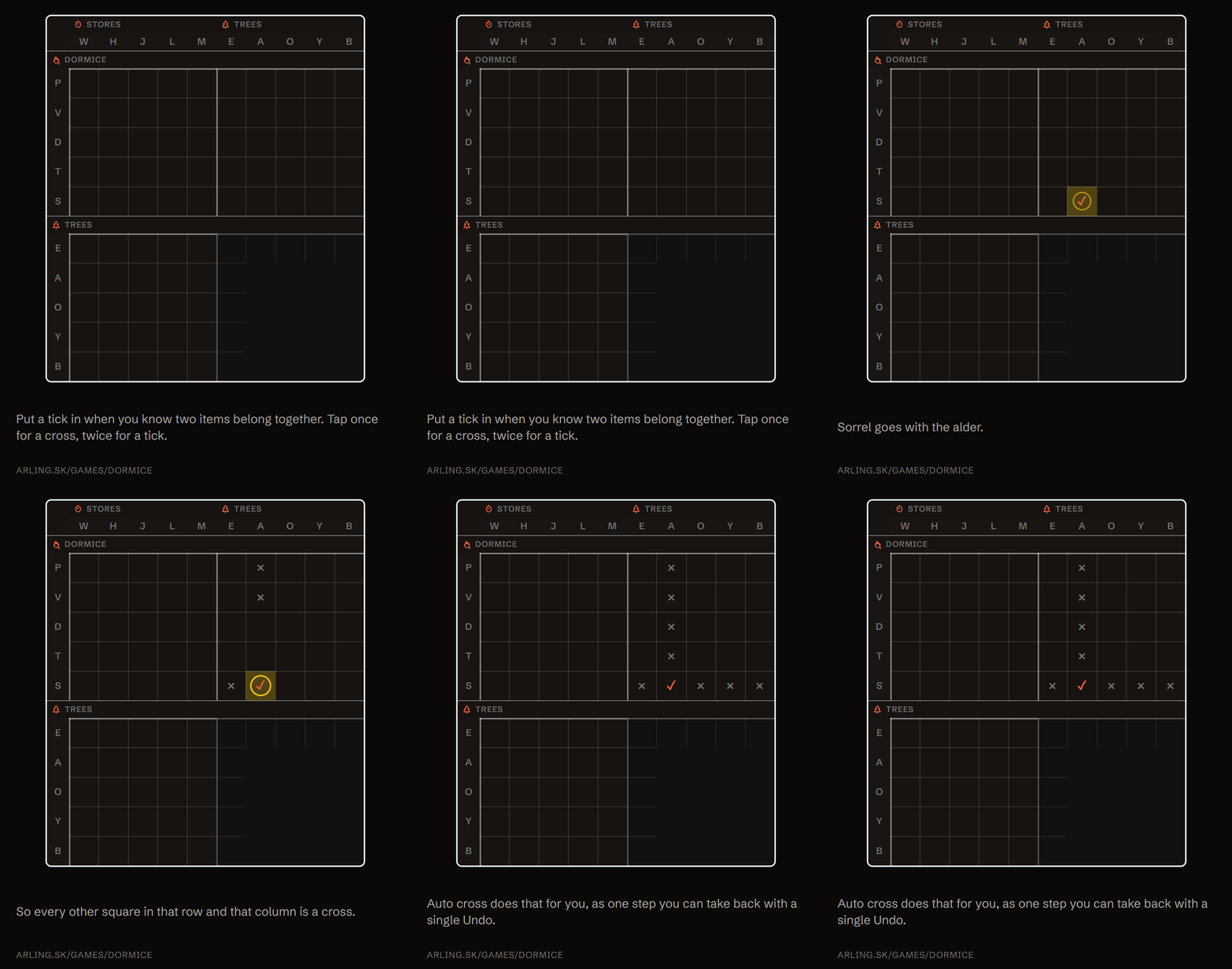
4. As soon as a tick goes into a square, every other square in that row and in that column of the same small table is a cross, because each item belongs to one dormouse and to no other.
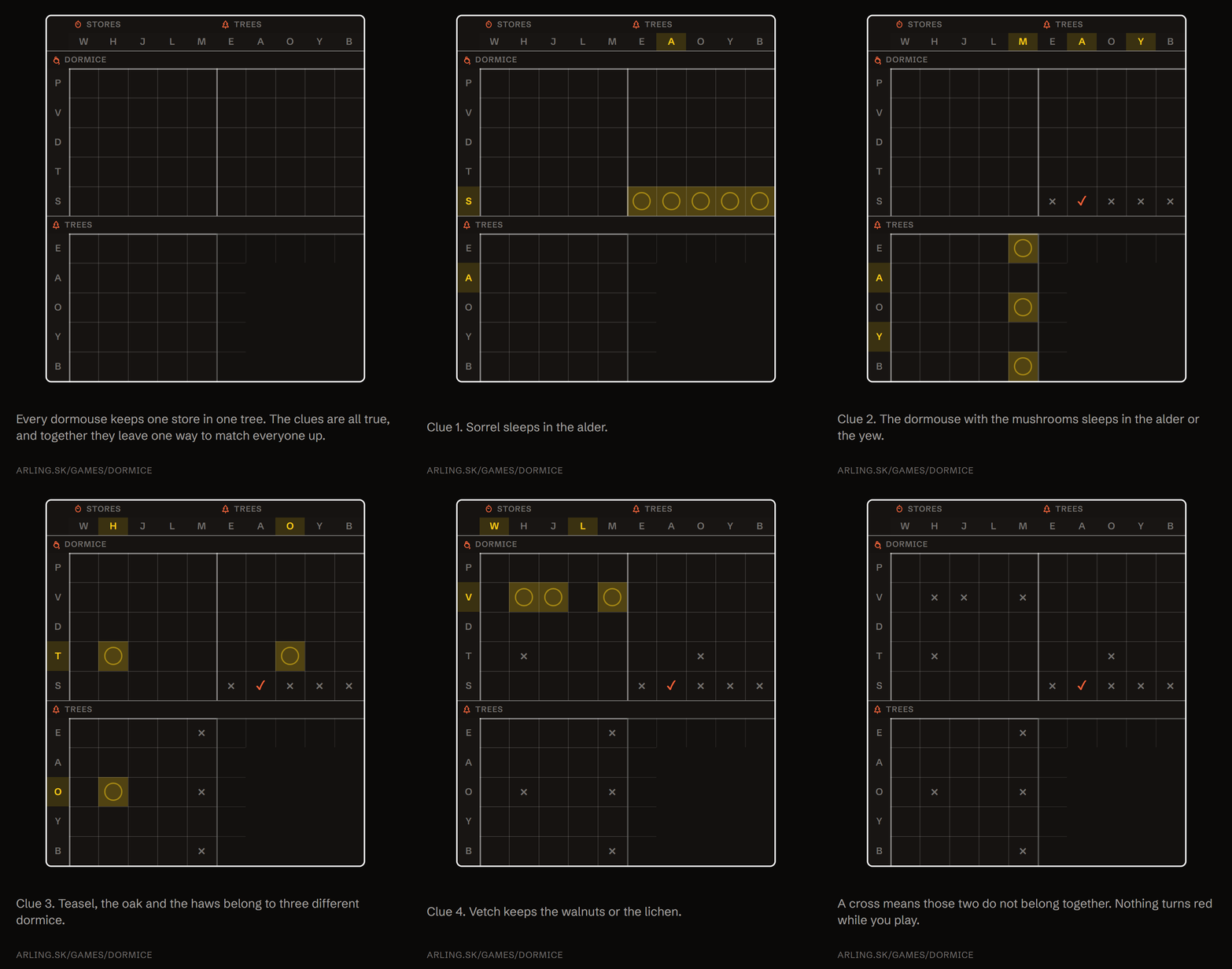
Animation: a clue is read out, the two headers it names light up, and the crosses it puts on the board are swept in one after another.

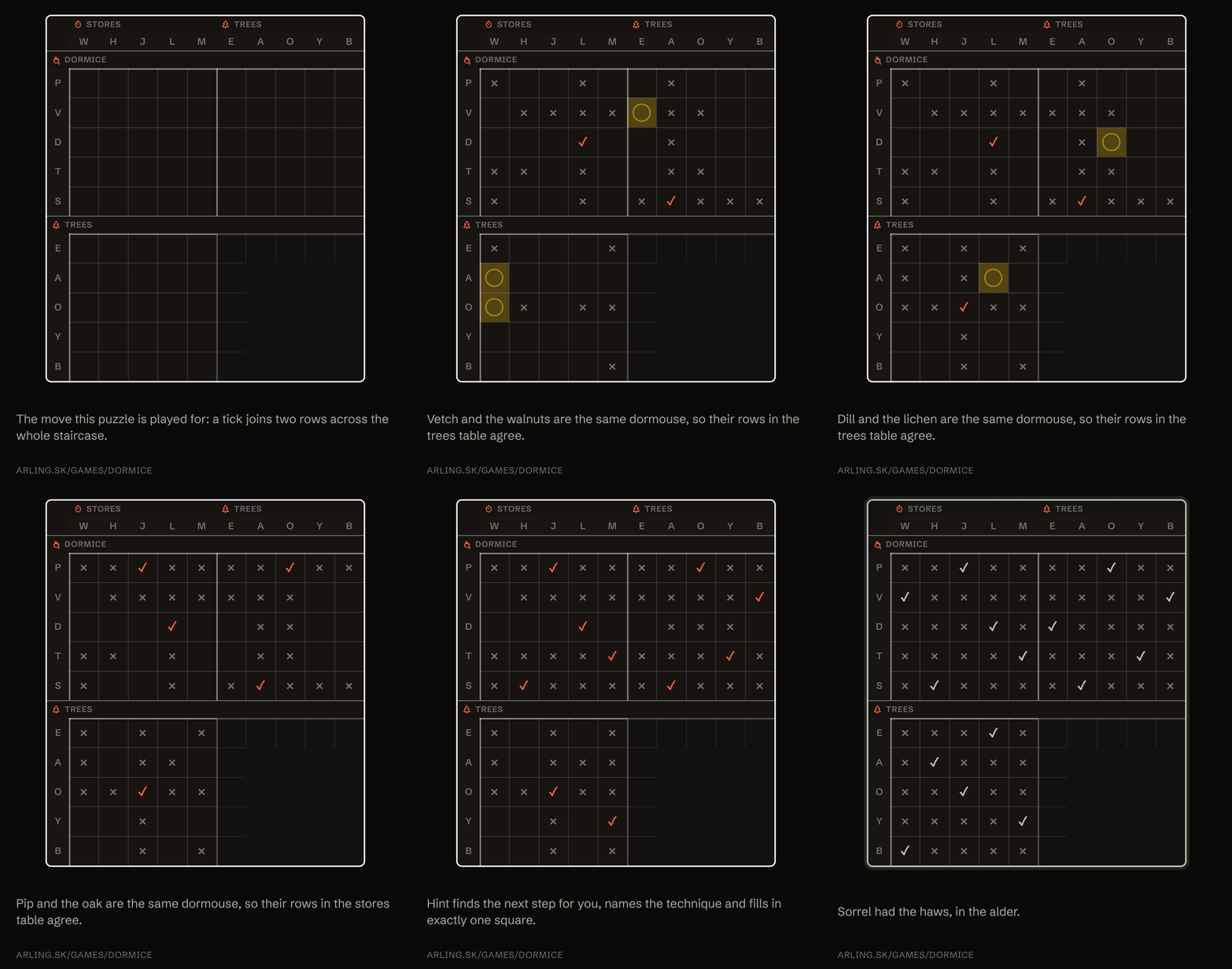
5. Ticks carry from table to table. If Pip keeps the sloes and the sloes are in the elm, then Pip woke in the elm, and anything the sloes are not, Pip is not either.

6. The weeks run in order, one week apart, so a clue that says two weeks earlier means exactly two steps along the week column, and a clue that says earlier without a number means any number of steps.

7. One store went missing from the shared larder overnight. Nothing has to be guessed: every square can be reached from the clues by reasoning, and when the table is full the last line tells you who had it, where and when.

Animation: a tick is placed in a square and the rest of that row and that column fill with crosses in a single step.

One worked example.

Three dormice, three stores, three trees. The clues: Pip does not keep the sloes; the sloes are kept in the elm; Tansy sleeps in the oak.

  1. Clue 1 is a cross: the square where Pip meets the sloes.
  2. Clue 2 is a tick: the sloes and the elm. The rest of that row and that column become crosses, so no other store is in the elm and the sloes are in no other tree.
  3. Clue 3 is a tick: Tansy and the oak, with the same row and column of crosses.
  4. Now carry across. Tansy is in the oak, and the sloes are in the elm, so Tansy does not keep the sloes. With Pip out by clue 1, the sloes belong to the third dormouse, and that dormouse is in the elm.
  5. Two dormice are settled, so the last row of every table has one square left, and a square with nothing left to rule out is a tick.

Nothing above was a guess. Every accepted puzzle is checked by a program that uses only the steps a person can use, and then by a second, independent search that confirms there is exactly one answer.

Hint, Check and the controls.

Hint works in two steps and is free. The first press names the technique and the table, without the value: it tells you where to look, not what to write. The second press fills in exactly one square and stops there, so the hint never finishes the puzzle for you. If there is already a wrong tick on the board, Hint shows that first, because nothing else is sound on top of it.

Check also works in two steps and only when you ask. The first press says how many of your ticks are wrong and which table they are in; the second marks them. Crosses are never counted: one wrong tick poisons dozens of squares through the carry between tables, and a raw count would tell somebody who made one mistake that they have forty.

Nothing turns red while you play. Finding your own mistake is part of the puzzle.

  • Tap a square for a cross, again for a tick, again to clear it. Drag to sweep crosses over several squares at once.
  • Tap a header or a name under the grid to outline that item everywhere it appears.
  • Tap a clue to strike it out when you have used it. One Undo brings it back.
  • On a phone the clue block above the board is three lines deep so that the grid is on the first screen. Scroll it, tap All clues to open every sentence at once, or use the reader under the board, which steps through the same clues with its arrows.
  • Keyboard: arrows move, Space cycles, X crosses, D ticks, Delete clears, [ and ] jump between tables, U undoes, R redoes, P pauses.
Animation: a hint names a clue and a table, then fills a single square, and a fact travels through a second table to close a third.

The week.

Difficulty is measured, not guessed: the solver counts how many steps of each kind a finished puzzle needs, and the candidates for a date are ranked by that number. Hard and Sunday are not bigger than Wednesday, they are harder.

Monday, TuesdayEasy. Three categories of five, no weeks. Clues that match or rule out a pair outright.
Wednesday, ThursdayMedium. Four categories of four, with the weeks and the first order clues.
Friday, SaturdayHard. The same shape, at most one clue that matches two items outright.
SundayChallenge. No outright matches at all, and one square that only gives way when you test an assumption until a clue breaks.

This week

Practice, archive, history.

Practice sets: twenty-four copses with no date attached, three sets of eight for each level. They never change and do not touch your streak.

Archive: every daily copse since Wednesday 10 September 2025, free. The same page shows your own history: every copse you solved in this browser, with time and hints. Nothing is sent anywhere; it lives in your browser only.

Stuck or found something wrong? Write to andrej@arling.sk.