ARLingGames

Guide

How to play Cranes.

Three rules, one water a day, exactly one solution. Every water is made to be reasoned out, not guessed: the numbers on the sandbanks are always enough, no guessing required.

Play today's water Start with an easy one

The rules.

1. Join the sandbanks with straight walkways. A walkway runs across the water, up and down or left and right, and only between two sandbanks that stand in line with nothing in between. The grid changes through the week, from seven by seven on Monday to thirteen by thirteen on Sunday.

2. A number on a sandbank counts its walkways. When it says four, exactly four walkways leave it, no more and no fewer. Two walkways may run side by side between the same pair, and that counts as two.

3. No crossings, and every sandbank reachable from every other. Walkways never cross, and the sandbanks must hang together in one piece. When both hold and every number is right, the water is finished and the game notices by itself.
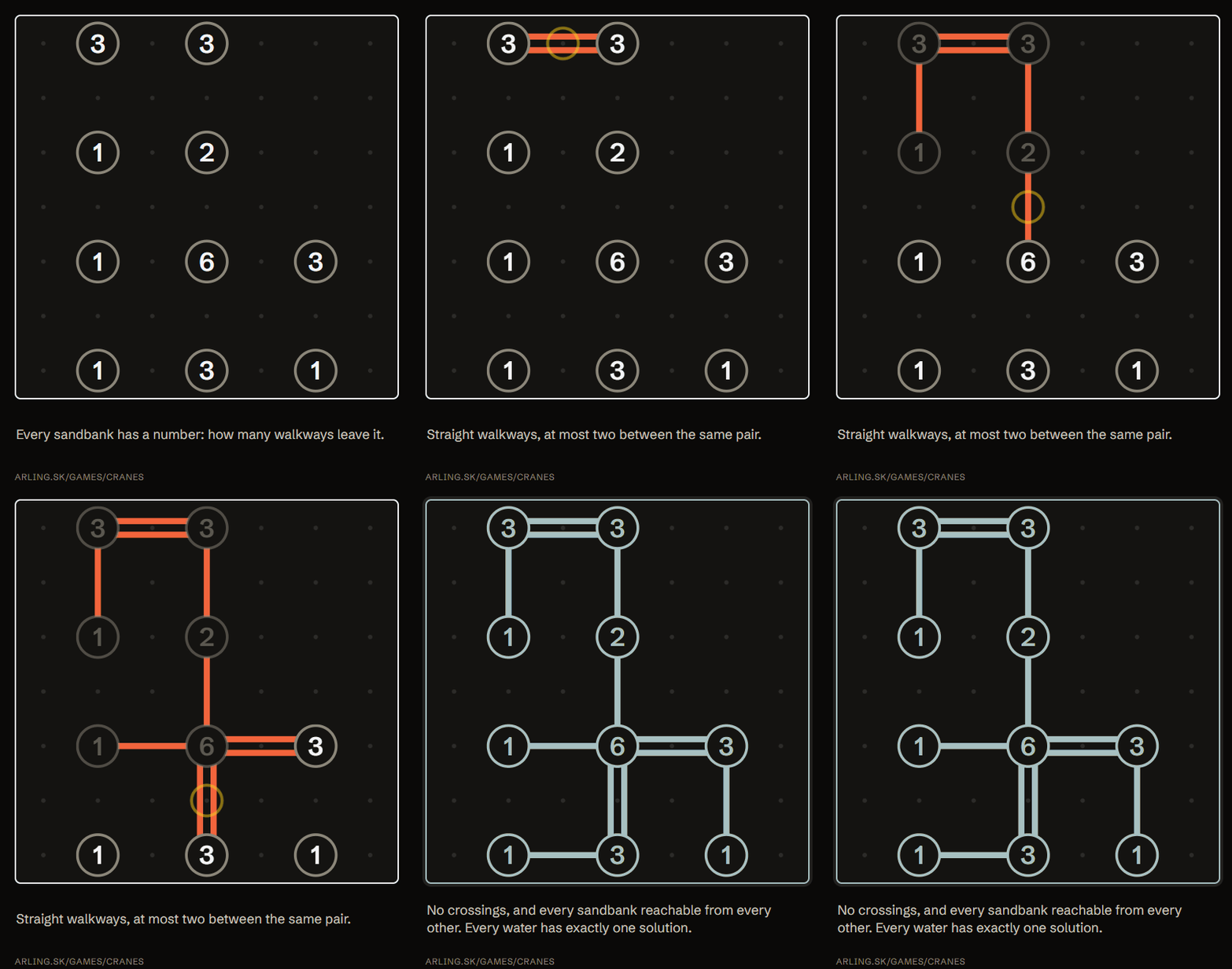
Animation: walkways are laid one by one between sandbanks until every number matches, and the water turns green as solved.

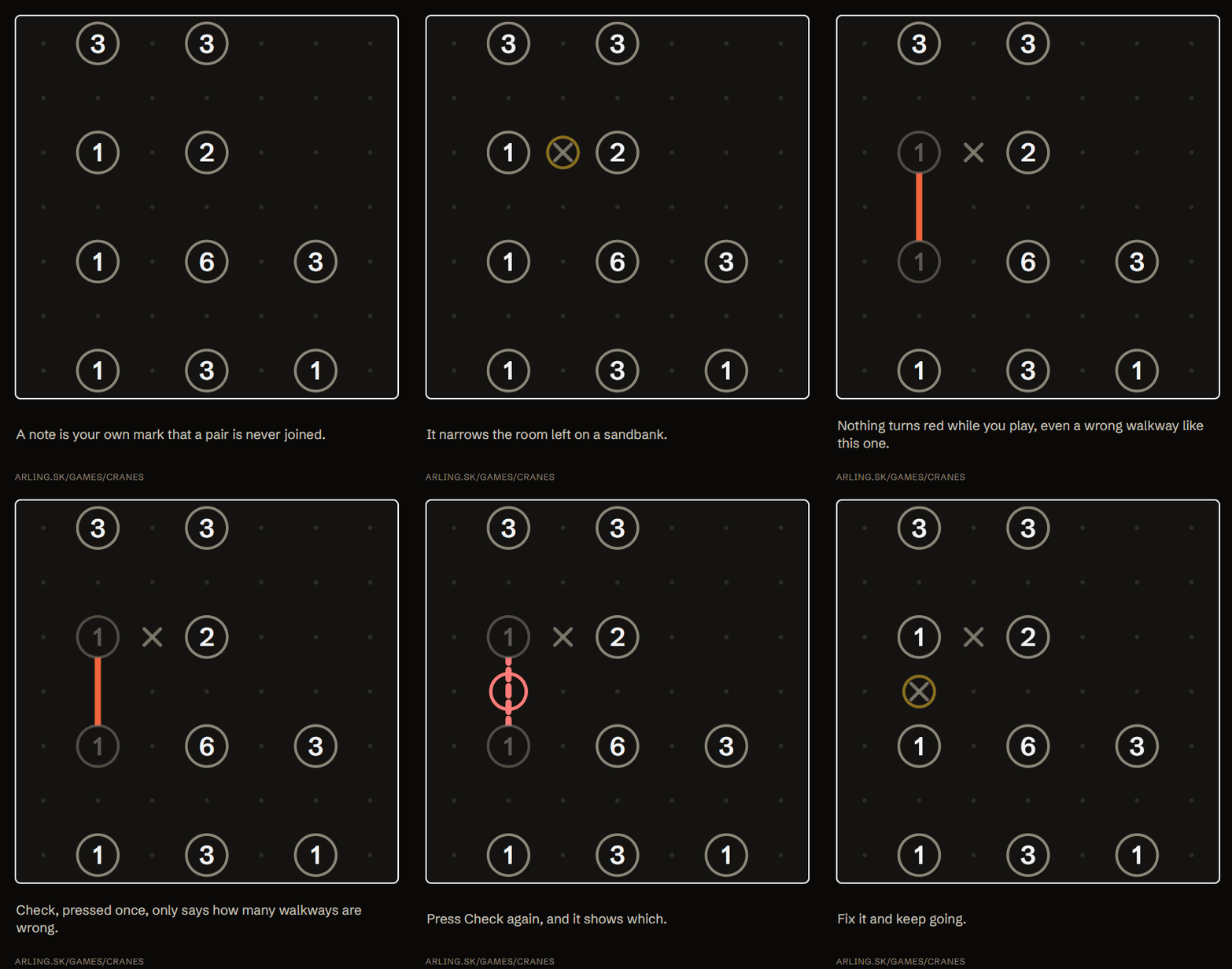
A note is your own mark, not an answer. Noting a pair as never joined narrows the room left on a sandbank; the game never marks a note wrong while you play, only when you ask with Check. On the phone, drag from one sandbank to another to join them. On a keyboard, arrows walk from sandbank to sandbank, Ctrl plus arrow lays a walkway, Shift plus arrow notes it, P pauses.

A wrong walkway is shown by Check, never by the board turning red while you play.

Animation: a note is placed on a pair that is never joined, then a wrong walkway is laid next to it, and it is revealed only after pressing Check twice.

A way in.

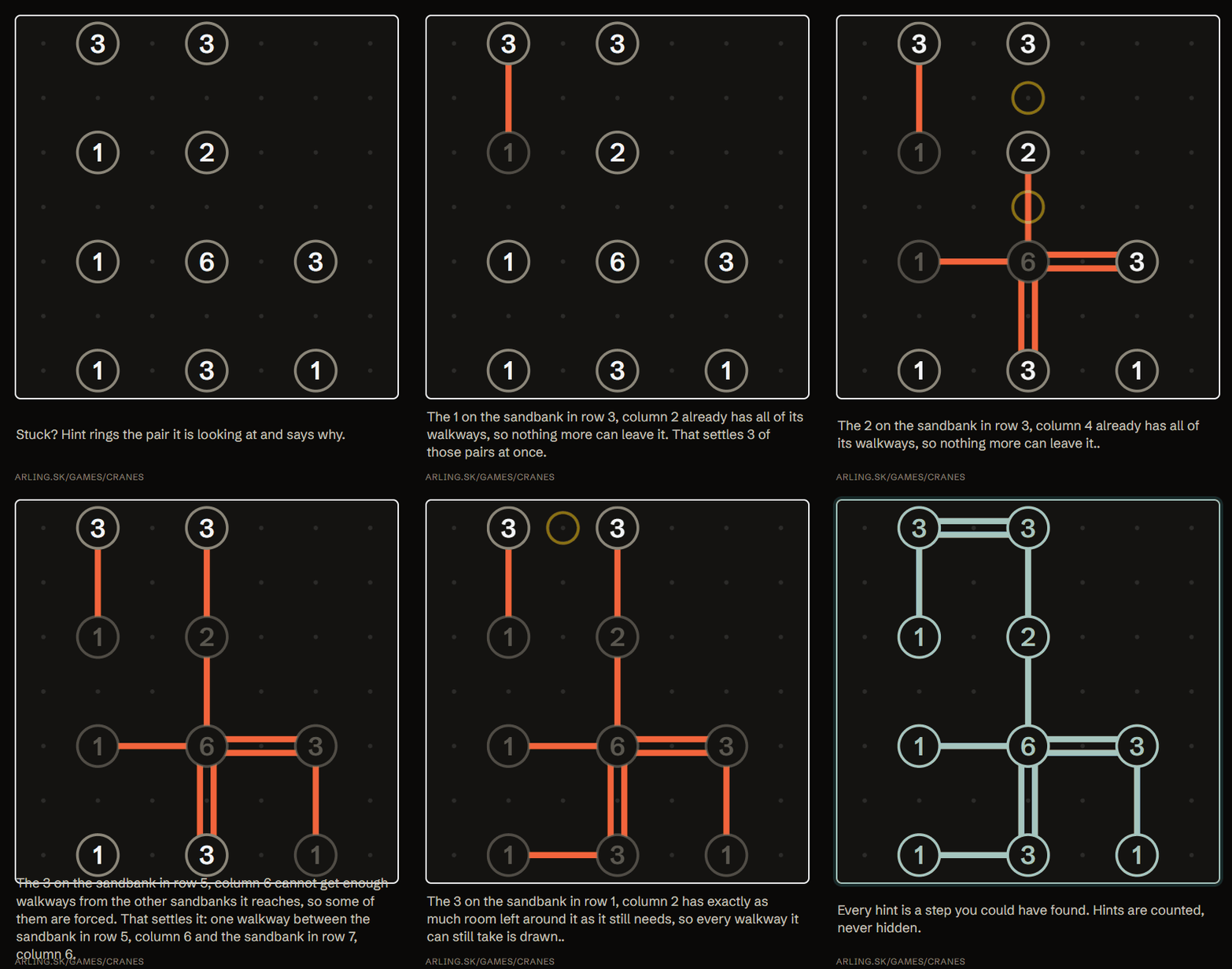
Every water opens with steps like these. Hint finds the next one for you, rings the pair it is about and says why; press it again to lay it down. Hints are counted and shown when you finish, never hidden.

  • A 1 or a 2 with a single neighbour. There is nowhere else for its walkways to go.
  • A number that is twice its neighbours. Every walkway to every neighbour is doubled.
  • Room exactly used up, or exactly enough left. Once a sandbank's walkways match its number, the rest of its pairs are closed; once its remaining neighbours have exactly as much room as it still needs, every one of those pairs is used.
  • Two sandbanks that would cut themselves off. Two 1s never join to each other, and two 2s never join twice: the pair would be finished and isolated from the rest of the water.
Animation: the Hint rings a pair of sandbanks and explains why, then the walkway is laid down; this repeats for the next steps.

The week.

Difficulty is measured, not guessed. Every water is solved by a program that only knows named rules, in three layers; the candidates for a date are ranked by how much of the hardest layer that solving needs.

Monday, TuesdayEasy, seven by seven, eight to ten sandbanks.
Wednesday, ThursdayMedium, nine by nine, twelve to fifteen sandbanks.
Friday, SaturdayHard, eleven by eleven, eighteen to twenty two sandbanks. The one-step trial starts to matter.
SundayChallenge, thirteen by thirteen, twenty six to thirty sandbanks, the most trial steps of the week's candidates.

This week

Practice, archive, history.

Practice sets: twenty-four waters with no date attached, three sets of eight for each level. They never change and do not touch your streak.

Archive: every daily water since Wednesday 10 September 2025, free. The same page shows your own history: every water you solved in this browser, with time and help used. Nothing is sent anywhere; it lives in your browser only.

Stuck or found something wrong? Write to andrej@arling.sk.